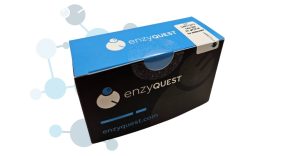
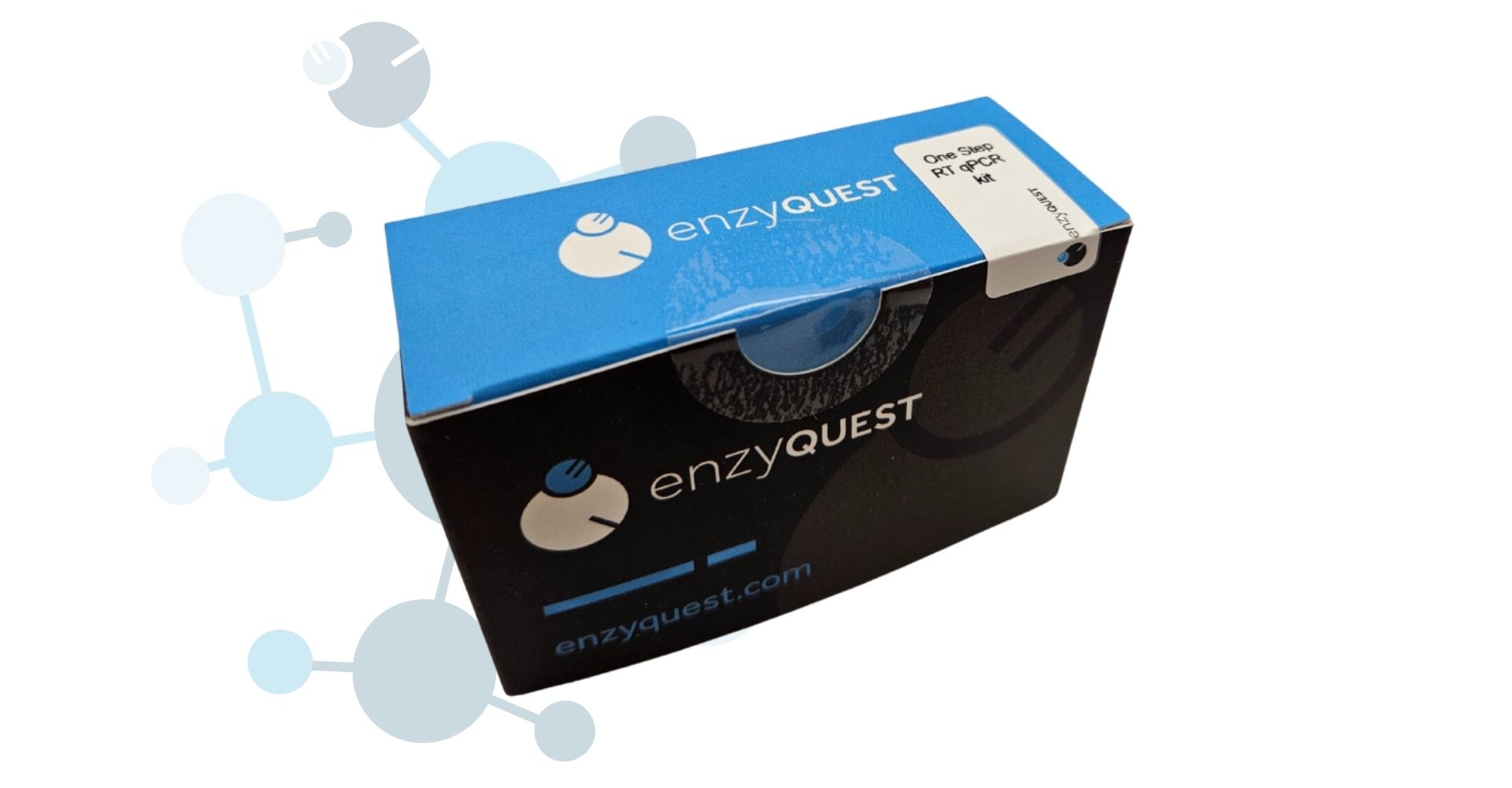
One step RT kit contains 5 X reaction buffer optimized for sensitive and specific detection of RNA species from various sources and purity backgrounds. Enzymes come separately in 20X and 200 X formulations to provide flexibility and adaptations to your substrate of interest, depending mainly on the presence of PCR inhibitors (when testing direct sample without RNA extraction or difficult samples like waste-water extracts). Optimizations on SARS COV2 templates in both swab and waste-water extracts using primer/probe sets included in WHO official protocols, in single and multiplex conditions, guarantee the reproducible and efficient qPCR reactions close to the qPCR theoretical limit of detection <5 copies per reaction for pure samples and between 5-50 copies/reaction for “tough samples” *.
*“Tough samples”: RNA samples that are produced from either direct protocol, without column extraction and washing steps, or originating from tissues or cells that have high chemical or enzymatic PCR inhibitory potential (High phenolic substances found in plant tissues or high concentration of RNases, DNases and Proteases context found in blood samples or mammalian tissue samples or fungi cells).
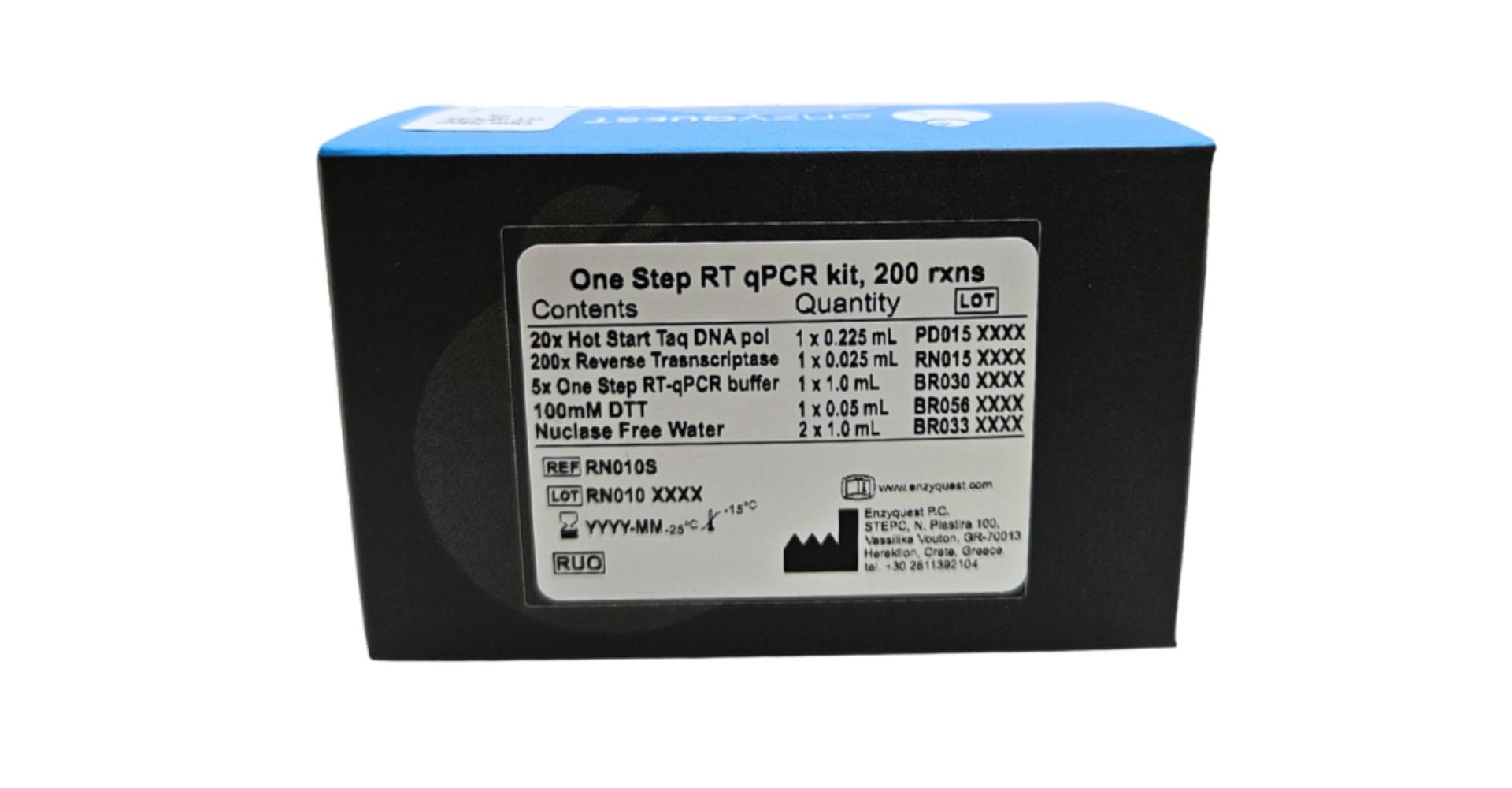
Reagents supplied:
| One Step RT qPCR kit, 200 rxns (Cat No: RN010S) | ||
| Cat No | Description | Tubes No. |
| BR030-1 | 5x One Step RT-qPCR buffer, 1 ml | 1 |
| PD015-0.225 | 20x Hot Start Taq DNA polymerase, 0.225ml | 1 |
| RN015-0.025 | 200x Reverse Transcriptase, 0.025ml | 1 |
| BR056–0.05 | 100 mM DTT. 0.05 | 1 |
| BR033- 1 | Nuclease Free Water, 1 ml | 2 |
Standard 20 μl reaction:
| Component | Concentration of Stock solutions | 1 reaction of 20 μl | Final Concentration/Quantity (20 μl assay) | |
| 1 | 5x One Step RT-qPCR buffer | 5x | 4 μl | 1x |
| 2 | 100 mM DTT | 100 mM | 0.2 μl | 1 mM |
| 3 | Fw primer | 10 μΜ | 0.4 μl | 0.2 μM |
| 4 | Rv primer | 10 μΜ | 0.4 μl | 0.2 μΜ |
| 5 | TaqMan Probes | 10 μΜ | 0.2-0.4 μl | 0.1-0.2 μΜ |
| 6 | 20x Hot Start Taq DNA polymerase | 20x | 1 μl | 1x |
| 7 | 200x Reverse Transcriptase | 200x | 0.1 μl (0.08-0.12 μl) | 1x |
| 8 | Template RNA* | 0.5-107 copies of target sequence/μl | 1-10 μl | 10 fg-500 ng |
| 9 | Nuclease Free Water | N/A | Till 20 μl | N/A
|
* Substrate quantity: up to 10 μL/reaction is recommended for pure RNA extracts. Use up to 5 μL for “tough” substrates.
Alternative suggestions:
Step 1: RT reaction. This step may be set up from 40 – 62 oC. Increase temperature for more highly structured RNA targets.
Step 2: RT inactivation/ Hot Start Taq DNA polymerase activation.
Initial activation of Hot Start at 94oC for 15 minutes is very important in the case of reactions with very low PCR template copies and for obtaining the maximum efficiency in qPCR setups. DO NOT USE FEWER THAN 10 MIN!!
Step 3: Cycle denaturation. It may be set 5-15 seconds. Optimize based on your target.
Step 4: Annealing/Extension step. Temperature and time depend on the primers’/probes’ Tm (melting temp) and amplicons’ length. The primers should be designed at Tm ~ 65 o C. Set this step at 6-10 oC below the lowest oligos’ tm and use 35 seconds for amplicons up to 250 bp. Annealing extension time may be lowered in 5 seconds steps (30 or 25 seconds) depending on the limit of detection and the efficiency required for the assay in question. Lowering time is recommended only if efficiency of the assay is not affected near the limit of detection.
Standard protocol for single and multiplexing
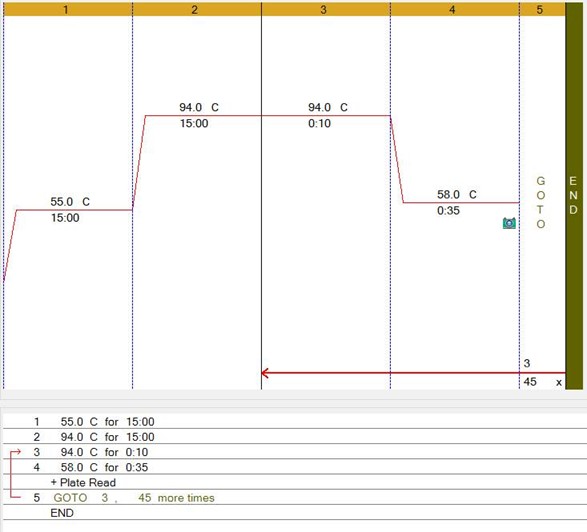
For more detailed guidelines visit the IFU manual.
Additives that improve robustness
In cases of samples with low viral content near the limit of detection (~5-10 copies/μl of wastewater sample) and/or high concentration of inhibitors one may also add extra T4gp32 protein to improve reactions’ efficiency. Final concentration in qPCR reactions should be 0.05 μg/μl for T4gp32. An example of the reaction setup including both additives may be found below:
| Component | Concentration of Stock solutions | 1 reaction of 20 μl | Final Concentration/Quantity (20 μl assay) | |
| 1 | 5x One Step RT-PCR buffer | 5x | 4 ㎕ | 1x |
| 2 | 10x SARS COV2 Oligos mix | 10x | 2 ㎕ | 1x |
| 3 | DTT | 100 mM | 0.2 ㎕ | 1 mM |
| 4 | Gp32 (Customer provided) | 10 μg/μl | 0.1 ㎕ | 0.05 μg/μl |
| 5 | 20x Hot Start Taq DNA polymerase | 20x | 1 ㎕ | 1x |
| 6 | 200x Reverse Transcriptase | 200x | 0.1 ㎕ | 1x |
| 7 | Template RNA* | 5-105 copies of target sequence/μl | 2-4 ㎕ | N/A |
| 8 | Nuclease Free Water | N/A | Till 20 ㎕ | N/A |
Recommended suppliers:
DTT may reverse mildly the inhibition potential of the sample whereas both should be used when high inhibition is suspected.
Other Quality Controls:
Certified as DNase-RNase free using fluorescently labeled RNase and DNase probes. Efficiency between 90-110%, with R2 value >0.99 of each lot is estimated by a standard curve assay produced over 5 logs of EURM019 substrate (https://crm.jrc.ec.europa.eu/p/EURM-019)
Shipping
Shipped on blue ice or dry ice.
Storage conditions
Store at -20οC ± 5οC
Shelf life
1 year upon production
Example: SARS COV 2 standard EURM019
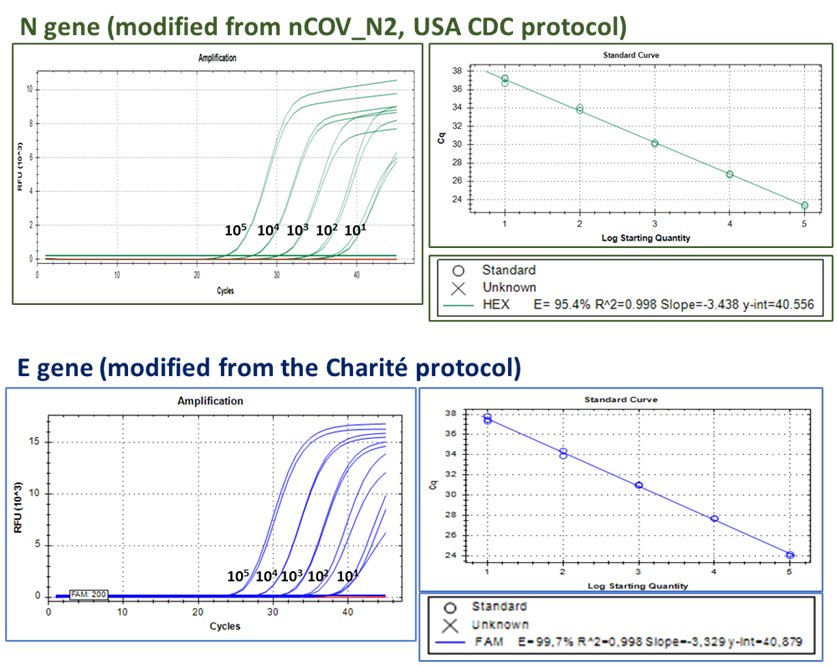
Figure 1. SARS COV2 standard curves produced by One Step RT qPCR kit (Cat No: RN010S). The standard curves were produced by analyzing the EURM019 SARS COV 2 standard over 5 logs. Standard dilutions were prepared, having as a given that the EURM019 stock solution contains 108 copies of SARS COV2 chimeric transcripts/μl (detailed info for EURM019 used may be found at https://crm.jrc.ec.europa.eu/p/EURM-019). Since the quantification of the EURM019 standard, performed by digital droplet PCR by manufacturer, produced results between 6 – 7.6 x 10⁷ copies/μl depending on the primer set used, the actual number of copies that were introduced in each reaction may be 24-40 % less than indicated in the figure.
Reactions were set in duplicates for 105-102 copies reactions and in triplicates for 10 copies reactions.
The Baseline was manually set to 200 Relative Fluorescent Units.
The results were automatically produced by CFX Maestro software. The reactions were incubated to either CFX96 or OPUS96 qPCR machines with very similar results.
Details regarding the primer sets used may be found at: https://www.who.int/docs/default-source/coronaviruse/whoinhouseassays.pdf