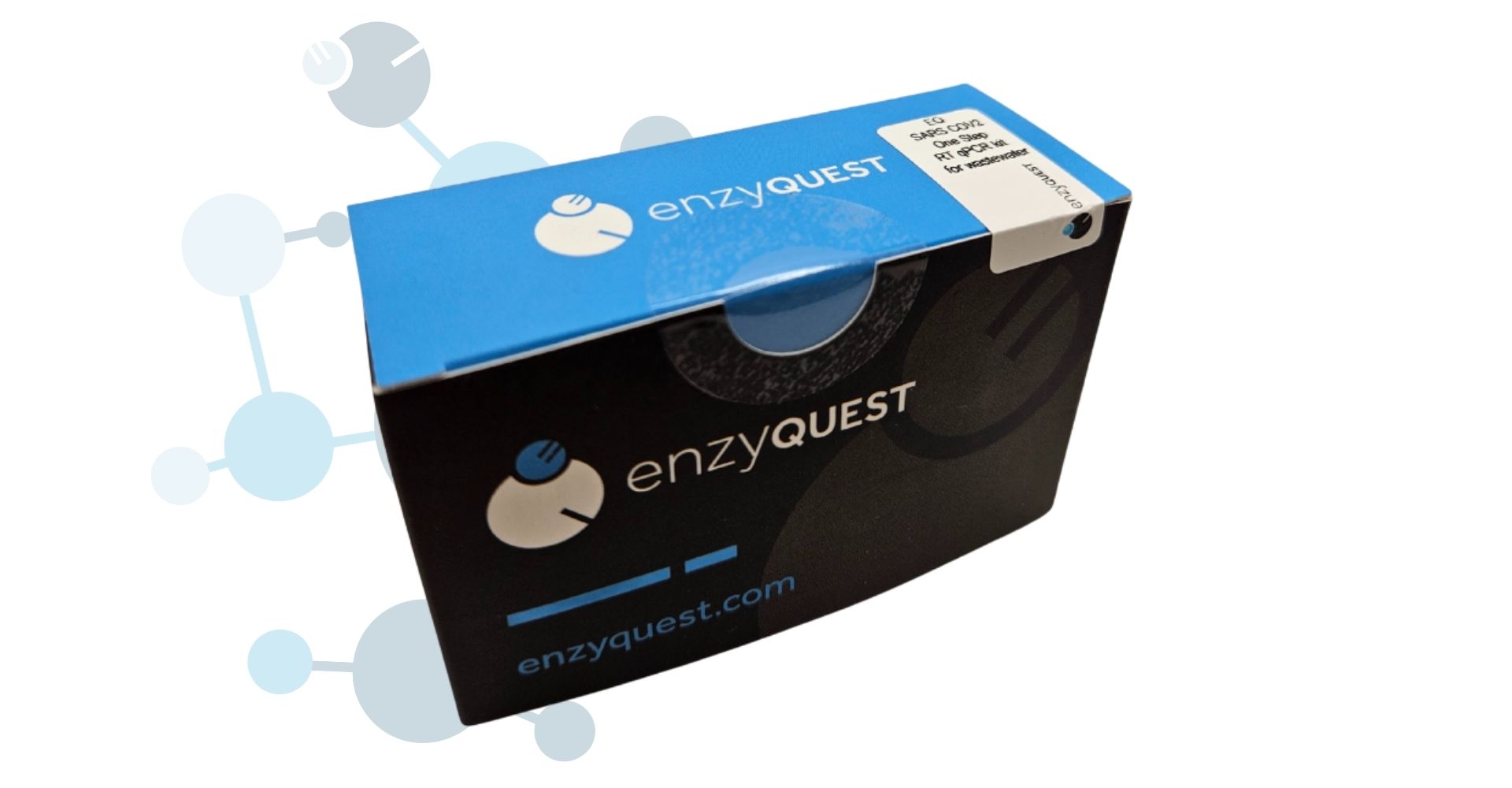
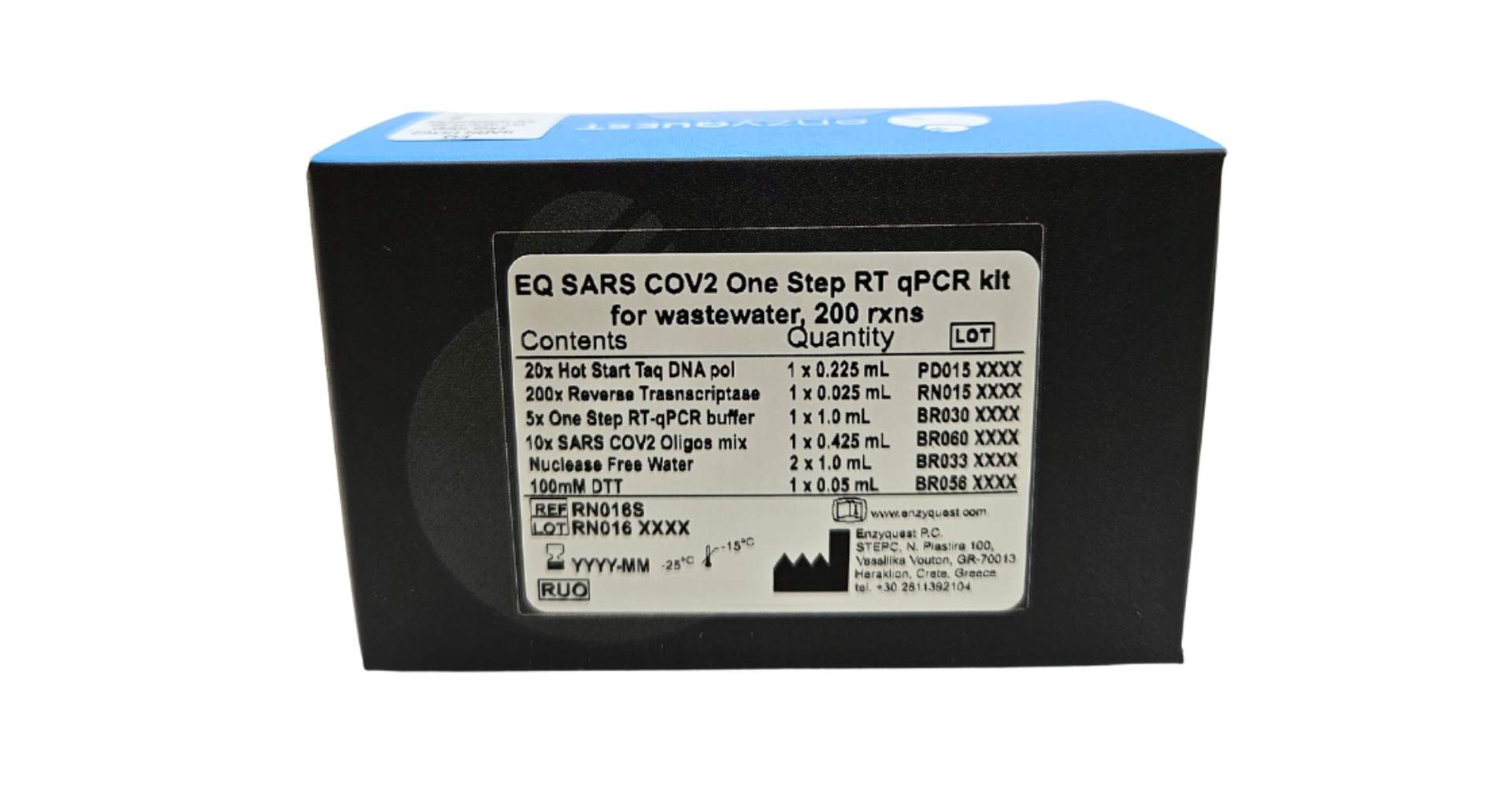
EQ SARS COV2 One Step RT qPCR kit for wastewater contains a 5x reaction buffer optimized for sensitive and specific detection of SARS COV2 RNA from various sources and purity backgrounds. Enzymes come separately in 20x and 200x formulations to provide flexibility and allow user to optimize depending on the purity of the substrate of interest (mainly on the presence of PCR inhibitors). The 10x SARS COV2 Oligos mix contains a combination of primers and probe for SARS COV2 N gene (modified USA CDC N2 primer/probe set), that allows detection of SARS COV2 transcripts at HEX/VIC channel. Optimizations on wastewater extracts samples guarantee the reproducible and efficient qPCR reactions close to the expected limit of detection (<10 copies per reaction). It can reliably detect and quantify as low as 10 copies per reaction, based on a standard curve produced by analyzing EURM019 dilutions, with efficiency ~ 90-110 %.
Reagents supplied:
| EQ SARS COV2 One Step RT qPCR kit for wastewater, 200 rxns (Cat No: RN016S) | ||
| Cat No | Description | Tubes No. |
| BR030-1 | 5x One Step RT-qPCR buffer, 1 ml | 1 |
| PD015-0.225 | 20x Hot Start Taq DNA polymerase, 0.225ml | 1 |
| RN015-0.025 | 200x Reverse Transcriptase, 0.025ml | 1 |
| BR060-0.425 | 10x SARS COV2 Oligos mix, 0.425 ml | 1 |
| BR056-0.05 | 100 mM DTT. 0.05 | 1 |
| BR033- 1 | Nuclease Free Water, 1 ml | 2 |
Table 1. RN016S kit components
Standard 20 μl reaction:
| Component | Concentration of Stock solutions | 1 reaction of 20 μl | Final Concentration/Quantity (20 μl assay) | |
| 1 | 5x One Step RT-PCR buffer | 5x | 4 ㎕ | 1x |
| 2 | 100 mM DTT | 100 mM | 0.2 μl | 1 mM |
| 3 | 10x SARS COV2 Oligos mix | 10x | 2 ㎕ | 1x |
| 4 | 20x Hot Start Taq DNA polymerase | 20x | 1 ㎕ | 1x |
| 5 | 200x Reverse Transcriptase | 200x | 0.1 ㎕* | 1x |
| 6 | Template RNA** | 5-105 copies of target sequence/μl | 2-4 ㎕ | N/A |
| 7 | Nuclease Free Water | N/A | Till 20 ㎕ | N/A |
Table 2. Standard reaction setup.
*0.08-0.12 μl may be added depending on the substrate used. For Reference Labs wastewater extracts analysis, 0.1 μl has been used extensively used. Do not add more than needed, because of PCR inhibition effect caused by the excess of Reverse transcriptase enzyme in the reaction.
** 2 μl of RNA extracts is recommended. In case of high concentration of PCR inhibitors, perform 1:10 dilution of the original wastewater extract sample and add 2-4 μL per reaction. 2 μL of wastewater extracts from Reference Labs have been extensively used in our analysis.
Optional: Depending on the wastewater quality, the region or the season collected, treatment of wastewater extracts with PCR inhibitors removal kits like the ones provided by ZYMO Research (https://zymoresearch.eu/collections/onestep-pcr-inhibitor-removal-kits), may be important to obtain accurate, quantifiable results. In order to verify the necessity of this type of treatment, test 4 independently extracted samples, collected over 2-4 weeks, and compare the quantification of the 1:10 dilution of either treated or untreated sample. If the difference obtained is lower than 30 % then that treatment may be omitted from the analysis.
Proposed assay
There are two assays proposed for the analysis.
The initial assay
The initial standard assay is very important to be able:
To that end, the reactions that needed to be set are the following:
After the reactions have been completed, produce equation, estimate efficiency and R2. If efficiency is between 90-110% and R2 value in above 0.98 then proceed to quantification. One may exclude reactions that do not conform with the expected values.
(Optional/ When applicable) Quantify samples, either with or without PCR inhibitor removal treatment and check whether there is a difference greater than 30 %. If there is, then the PCR inhibitor removal kit may be necessary before the RT-qPCR analysis for the accurate quantification of the viral load in the wastewater sample. If both cases produce similar quantity, then the PCR inhibitor removal step may be omitted.
If the quantification of this kit needs to be compared with a different method, then the comparison need to take place at the same freeze-thaw cycle of the samples, meaning that previous quantity record of the samples may deviate greatly due to RNA degradation and not due to a difference in kits’/methods’ quantification efficiency.
The Routine assay
After the initial run, the routine run for wastewater analysis may contain:
Optimized component addition order for master mix preparation
First add water and then continue by adding the buffer, the oligos, 20x Hot Start Taq DNA polymerase and finally the 200x Reverse Transcriptase. While adding each enzyme to the master mix, pipette up and down for 5-10 times (to dissolve glycerol) and then add the next one. Perform one final mix by mild vortex (1000-1200 rpm) until glycerol is completely dissolved. Aliquot the appropriate volume and add water to the negative control reactions and close the caps. Then proceed to the samples addition and close the caps and finally add template to the standard curves’ reactions and close the caps.
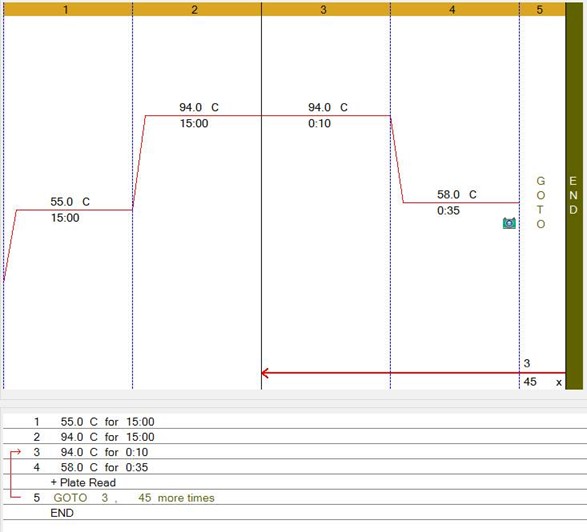 IFU with more details is available!
Additives that improve robustness
In cases of samples with low viral content near the limit of detection (~5-10 copies/μl of wastewater sample) and/or high concentration of inhibitors one may also add T4gp32 protein to improve reactions’ efficiency. Final concentration in qPCR reactions should be 0.05 μg/μl for T4gp32. An example of the reaction setup including both additives may be found below:
| Component | Concentration of Stock solutions | 1 reaction of 20 μl | Final Concentration/Quantity (20 μl assay) | |
| 1 | 5x One Step RT-PCR buffer | 5x | 4 ㎕ | 1x |
| 2 | 10x SARS COV2 Oligos mix | 10x | 2 ㎕ | 1x |
| 3 | DTT | 100 mM | 0.2 ㎕ | 1 mM |
| 4 | Gp32 (Customer provided) | 10 μg/μl | 0.1 ㎕ | 0.05 μg/μl |
| 5 | 20x Hot Start Taq DNA polymerase | 20x | 1 ㎕ | 1x |
| 6 | 200x Reverse Transcriptase | 200x | 0.1 ㎕* | 1x |
| 7 | Template RNA** | 5-105 copies of target sequence/μl | 2-4 ㎕ | N/A |
| 8 | Nuclease Free Water | N/A | Till 20 ㎕ | N/A |
Recommended suppliers:
Other Quality Controls:
Certified as DNase-RNase free using fluorescently labeled RNase and DNase probes. Efficiency between 90-110%, with R2 value >0.99 of each lot is estimated by a standard curve assay produced over 5 logs of EURM019 substrate (https://crm.jrc.ec.europa.eu/p/EURM-019)
Shipping
Shipped on blue ice or dry ice.
Storage conditions
Store at -20οC ± 5οC
Shelf life:
2 years upon production
Example: SARS COV 2 standard EURM019
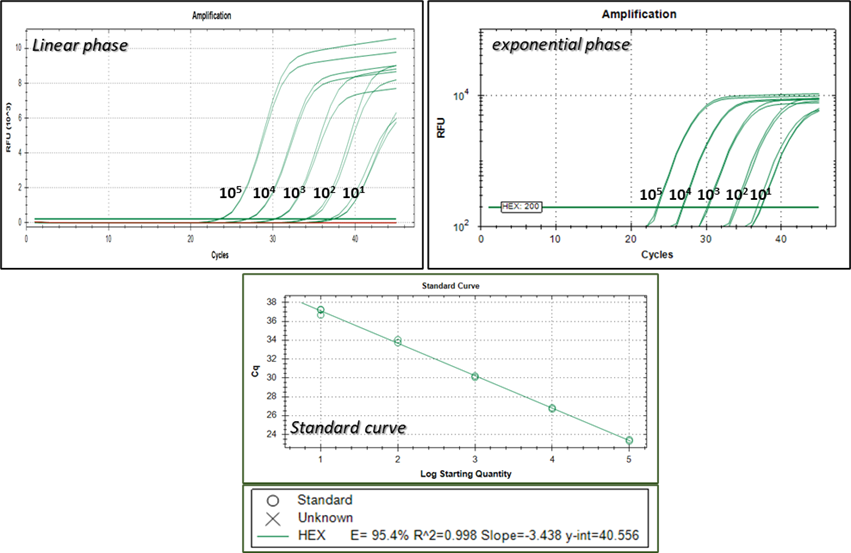
Figure 1. SARS COV2 standard curves produced by EQ SARS COV2 One Step RT qPCR kit for wastewater (Cat No: RN016S). The standard curves were produced by analyzing the EURM019 SARS COV 2 standard over 5 logs (example of initial assay). Standard dilutions were prepared, having as a given that the EURM-019 stock solution contains 108 copies of SARS COV2 chimeric transcripts/μl (detailed info for EURM019 used may be found at https://crm.jrc.ec.europa.eu/p/EURM-019). Since the quantification of the EURM-019 standard, performed by digital droplet PCR by manufacturer, produced results between 6 – 7.6 x 10⁷ copies/μl depending on the primer set used, the actual number of copies that were introduced in each reaction may be 24-40 % less than indicated in the figure. The results were automatically produced by CFX Maestro software. The reactions were incubated to either CFX96 or OPUS96 qPCR machines with very similar results.